CrossFit Injuries: Should You Stop Exercising When Something Hurts?
CrossFit Injuries: Should You Stop Exercising When Something Hurts?
At some point, everyone gets hurt.
It doesn’t matter whether you do CrossFit, run marathons, play pickleball, lift weights, hike, or spend most of your day sitting at a desk. Eventually, something is going to ache, tighten up, get tweaked, or stop cooperating.
The question isn’t whether you’ll experience pain or discomfort. The question is what you’ll do when it happens.
Unfortunately, many people follow the same pattern. Their shoulder starts bothering them, their knee becomes irritated, or their back tightens up, and before long they’ve stopped exercising altogether.
In many cases, that’s exactly the wrong thing to do.
Disclaimer: This article is for educational purposes only and should not replace medical advice. If you experience severe pain, a traumatic injury, significant swelling, numbness, or hear a distinct pop followed by immediate loss of function, consult a qualified healthcare professional.
Are CrossFit Injuries More Common Than Other Activities?
One of the biggest misconceptions about CrossFit injuries is that they’re somehow inevitable or dramatically more common than injuries in other activities.
The reality is more nuanced.
Research consistently shows that CrossFit injury rates are comparable to many other recreational activities, including running, traditional weightlifting, and recreational sports.
The truth is simple: movement carries some risk. Sitting still carries risks too.
Back pain, shoulder discomfort, stiff hips, and aching knees are incredibly common among people who spend most of their day sitting at a desk.
Whether you train at a gym, play sports on weekends, or simply try to stay active, you’ll likely deal with some aches and pains over time.
The goal isn’t to avoid every possible injury.
The goal is to learn how to respond intelligently when discomfort shows up.
When to Back Off
There are times when stopping or significantly modifying activity is the right call.
If you hear or feel a distinct pop, snap, or something immediately feels “not right,” take it seriously.
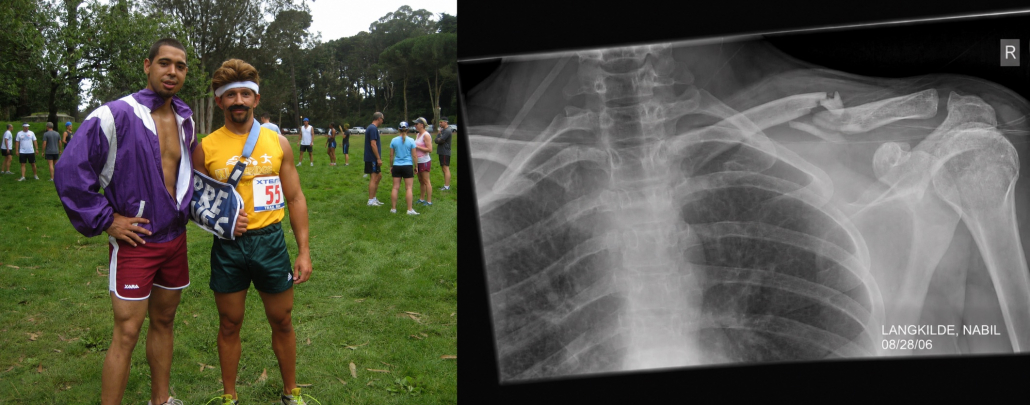
I’ve broken fingers, a leg, and both collarbones on separate occasions. Every one of those injuries came with a clear moment when I knew something significant had happened.
That’s very different from waking up with a sore shoulder, an irritated knee, or a tight lower back.
Those situations deserve caution, but they don’t automatically require complete inactivity.
The 5-Out-of-10 Rule
As a general guideline, if discomfort is around a 5 out of 10 or less, continuing to move is often beneficial.
That doesn’t mean ignoring pain. It means paying attention to it.
Many people can continue exercising successfully by:
- Reducing weight or intensity
- Modifying specific movements
- Limiting aggravating ranges of motion
- Slowing down the workout pace
- Substituting exercises that don’t increase symptoms
The goal isn’t to prove how tough you are.
The goal is to maintain movement, blood flow, strength, and fitness while allowing the irritated area to calm down.
If movement quality starts deteriorating or pain continues increasing throughout the workout, that’s a signal to make further modifications or stop stressing that particular area.
Why Movement Often Helps You Recover
One of the most common mistakes people make is waiting until they feel completely pain-free before they start moving again.
The problem is that movement is often part of the solution.
Appropriate exercise improves circulation, maintains muscle mass, preserves mobility, and helps prevent the deconditioning that can occur after extended periods of inactivity.
That doesn’t mean every movement is appropriate.
It means finding the right movement at the right intensity for your situation.
For example, if squatting aggravates your knee, maybe you reduce the depth, lower the load, or switch to a different movement pattern temporarily.
If pull-ups bother your shoulder, maybe you focus on rows, band work, or strict pressing variations instead.
There’s almost always something productive you can do.
The Most Common Cause of Nagging Pain
One of the biggest misconceptions in fitness is assuming recurring pain automatically means something is damaged.
Sometimes that’s true.
Many times, it isn’t.
Over the last two decades in the fitness industry, I’ve seen countless recurring aches and pains that were ultimately strength and movement-quality problems.
Not “How much can you deadlift?” strength.
Not “What’s your one-rep max?” strength.
I’m talking about the smaller stabilizing muscles that help your joints function properly.
The muscles around your shoulder blades help your shoulders move efficiently overhead.
The smaller muscles around your hips help your knees track properly when squatting, running, hiking, and climbing stairs.
These muscles rarely get attention until they’re weak enough to create a problem.
Many people spend years chasing pain relief when what they actually need is improved strength, control, and movement quality.
How Good Coaching Helps You Stay Active
This is one of the biggest advantages of working with experienced coaches.
At CrossFit Sweat Shop in Walnut Creek, we rarely tell someone to stop moving completely.
Instead, we find ways to keep them training safely.
Maybe you’re not doing pull-ups today.
Maybe you’re not squatting heavy.
Maybe we’re modifying the workout entirely.
More often than not, there’s still plenty you can do.
Great coaching isn’t about forcing everyone through the same workout.
It’s about adjusting the workout to fit the person standing in front of you.
Whether you’re dealing with shoulder pain, knee discomfort, back tightness, or recovering from a previous injury, having a coach who understands movement modifications can help you maintain momentum instead of starting over every few weeks.
The Goal Isn’t Perfection—It’s Momentum
If you’ve been dealing with the same ache or pain for months—or even years—and haven’t done anything about it, consider this your friendly kick in the pants.
There is too much life to live, too many adventures to have, and too many things to experience to spend your time sitting on the sidelines because your shoulder, knee, or back has been bothering you.
Keep moving.
Keep getting stronger.
Find activities you enjoy.
Ask for help when you need it.
Because the goal isn’t perfection.
The goal is maintaining momentum.
If you’re looking for a supportive gym in Walnut Creek that can help you train around injuries, build strength safely, and improve your long-term health, we’d love to help.
Book your free intro session today and discover how personalized coaching can help you stay active for life.