CrossFit for Beginners in Walnut Creek: A Good Gym Should Teach You Something
One of the most common things I hear from active adults considering CrossFit begins with two words:
“Yeah, but…”
“Yeah, but I’ve never done those lifts where you put a barbell over your head.”
“Yeah, but Olympic lifts look really technical.”
These concerns don’t usually come from people who are completely new to exercise. Many already run, cycle, hike, lift weights, attend fitness classes, or work out on their own. They know how to work hard and understand the value of being active.
What makes them hesitate is the idea of walking into a CrossFit gym and being asked to perform movements they have never learned.
If you’re looking into CrossFit for beginners in Walnut Creek and feel the same way, here is the most important distinction to understand:
Technical does not mean reserved for advanced athletes.
It simply means there is something to learn.
“I’ve Never Done That” Is a Starting Point, Not a Disqualification
People sometimes talk about unfamiliar movements as if not already knowing them is evidence that they shouldn’t begin.
But everyone who knows how to perform an Olympic lift, climb a rope, swing a kettlebell, or do a pull-up variation had to learn at some point. No one becomes experienced without first being inexperienced.
The same is true outside the gym.
You don’t avoid taking swimming lessons because you don’t already know how to swim. You don’t decide that skiing isn’t for you because you’ve never worn skis. You don’t assume you’re incapable of learning to play an instrument because you can’t already play a song.
You start with instruction. You practice the fundamentals. You improve gradually.
CrossFit should work the same way.
A beginner should not be expected to walk into a CrossFit class already knowing the movements. A good coach should explain what is being taught, choose an appropriate starting point, and help that person build skill over time.
Not knowing how to do something is not proof that CrossFit is too advanced for you.
It is the reason coaching exists.
Technical Does Not Mean Too Advanced
Olympic lifts such as the clean and the snatch require coordination, timing, balance, and technique. That is precisely why they can be so rewarding to learn.
Technical movements are not divided into two categories: people who can do them and people who cannot.
They exist on a progression.
One person may be learning the basic positions with a lightweight training bar. Another may be practicing with an empty barbell. Someone with more experience may be refining a particular part of the lift. An advanced athlete may be working toward a heavier attempt.
All four people can be training the same general movement while receiving a challenge appropriate for their current ability.
That is an important part of well-coached CrossFit: the intended lesson can remain consistent even when the exact movement or weight differs from person to person.
Beginners don’t need to perform the finished, advanced version of a skill on their first day. They need an entry point that allows them to learn safely and successfully.
Sometimes that means using a lighter barbell. Sometimes it means reducing the range of motion, slowing the movement down, or practicing one piece at a time. In other situations, the coach may select a simpler movement that develops the same foundational qualities.
The goal is not to pretend that technique doesn’t matter.
The goal is to teach it.
Olympic Lifting Is Only One Part of CrossFit
Olympic lifts tend to receive a disproportionate amount of attention from people who are unfamiliar with CrossFit.
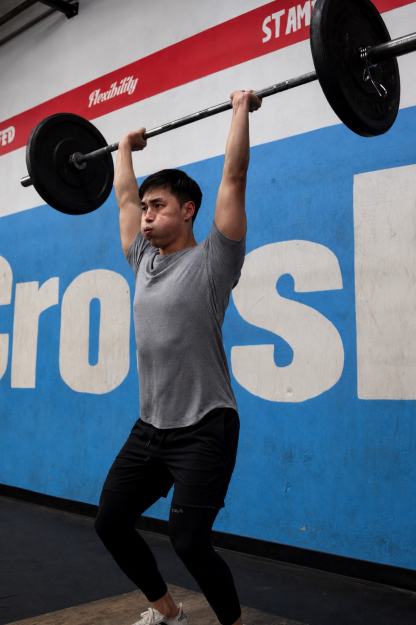
That makes sense. A barbell moving quickly from the floor to someone’s shoulders—or all the way overhead—is visually striking. It looks much more technical than running, rowing, or riding a bike.
But Olympic lifting represents only a small portion of CrossFit training.
A well-rounded CrossFit program can include:
- Foundational strength movements such as squats, deadlifts, and presses
- Bodyweight movements such as push-ups, sit-ups, lunges, and pull-up progressions
- Running, rowing, biking, and other cardiovascular training
- Carries, sled work, kettlebells, dumbbells, and medicine balls
- Balance, coordination, mobility, and movement-control exercises
- Short, moderate, and longer conditioning workouts
You may practice an Olympic lift on one day and never touch a barbell during the next class.
CrossFit is not a weightlifting program with occasional conditioning added to it. It is a broad approach to fitness designed to develop strength, stamina, endurance, coordination, balance, power, speed, and other physical capabilities.
The variety is part of what keeps the training useful and engaging.
It also means someone can begin CrossFit without needing to feel confident in every possible movement. You learn the program the same way you learn anything substantial: one lesson at a time.
Those Large Plates May Be Lighter Than They Look
Another source of intimidation is the appearance of the weights themselves.
People who are accustomed to traditional iron plates often assume that every large plate on a barbell must be extremely heavy. CrossFit gyms, however, commonly use rubber bumper plates because they are designed to be dropped safely during certain lifts.
Bumper plates generally share a similar outside diameter, even when their weights are very different.
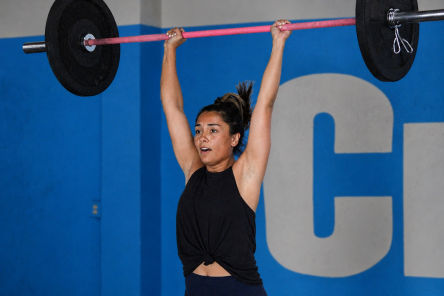
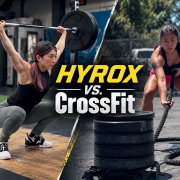
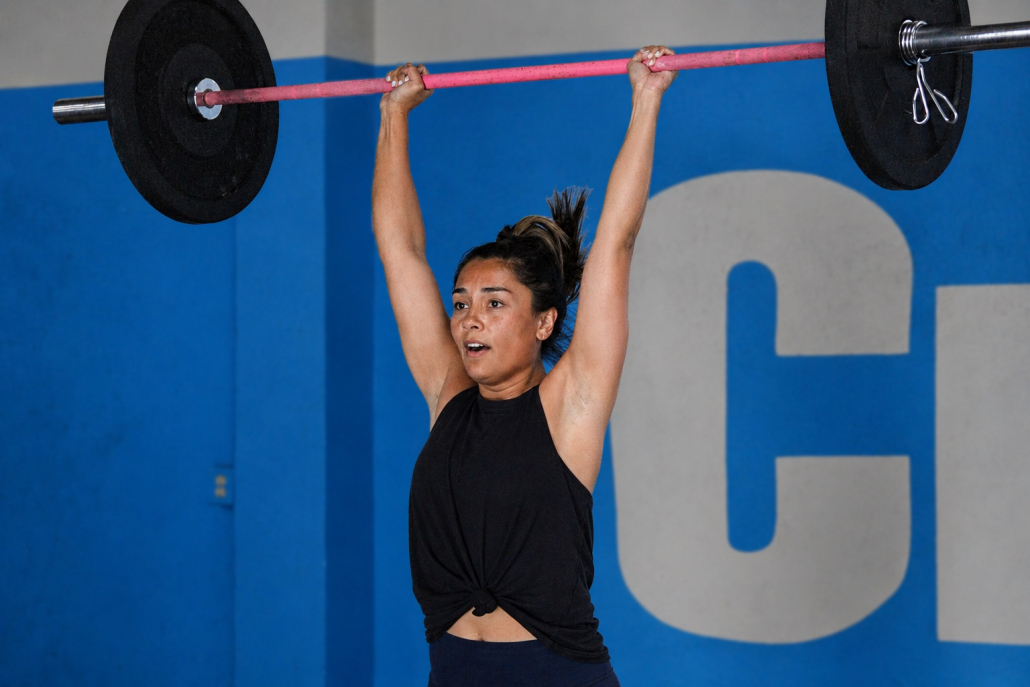
Not to take anything away from Kelly, but those plates aren’t as heavy as they may look. CrossFit gyms use rubber plates that share the same diameter as much heavier iron plates but can be safely dropped. The plates pictured weigh just 10 pounds each, and the barbell weighs 35—for a total of 55 pounds.
A 10-pound rubber plate can therefore look similar in size to a much heavier plate. CrossFit gyms may also have barbells of different weights, allowing athletes to learn with something more appropriate than a traditional 45-pound bar.
From across the room—or in a photo—a beginner practicing with a modest total weight can appear to be lifting far more than they actually are.
The equipment is designed to make the movements more approachable, not more intimidating.
Of course, the number on the bar is only one part of the equation. A weight that feels light to one person may be challenging to another. Good coaching isn’t about making everyone lift the same amount. It is about selecting the load that allows each person to practice well and make progress.
A Beginner CrossFit Class Should Still Feel Like Training
Making CrossFit approachable does not mean removing every challenge or reducing the experience to generic exercise.
Beginners should be taught, not underestimated.
An appropriate first step should allow someone to experience real training while keeping the movement complexity, weight, pace, and overall intensity manageable. The person should leave feeling that they accomplished something—not that they were thrown into an advanced workout and expected to keep up.
This is where coaching matters.
A coach should be able to recognize the difference between productive challenge and unnecessary difficulty. The right version of a movement should require attention and effort without placing someone in a situation they are not prepared to handle.
That balance will look different for each person.
An active runner may have excellent endurance but little experience with strength training. Someone who lifts weights regularly may be strong but unfamiliar with faster conditioning. A former athlete may learn movements quickly but need time to rebuild consistency. Someone returning to exercise may require a more gradual starting point across the board.
“Beginner” is not a single fitness level.
It simply means there is something new to learn.
Learning Is What Keeps Training Interesting
There is nothing wrong with exercise that has a very short learning curve. Walking, cycling, and other familiar activities can provide tremendous health and fitness benefits.
But when an entire routine offers little opportunity to develop new skills, exercise can eventually begin to feel like another obligation: show up, accumulate minutes, burn calories, and repeat.
CrossFit offers another layer.
You aren’t only trying to work harder. You are learning how to move better.
You may improve your squat mechanics, develop your first strong push-up, become more efficient on a rowing machine, learn how to use a barbell, or discover that you can carry something that once felt impossibly heavy.
Those small breakthroughs matter.
They give training direction. They create evidence of progress that extends beyond calories burned or sweat produced. They allow someone to look back and recognize that they are more capable than they were a few months earlier.
<p><p><p><p>That process can be deeply motivating.
Once you experience the satisfactio
n of lear
ning a ph
ysical sk
ill, the fact that CrossFit has a learning curve stops feeling like a drawback. It becomes one of the main reasons to continue.
You Don’t Need to Master a Movement to Benefit From It
Beginners sometimes assume that if they cannot perform the most recognizable version of a CrossFit movement, they are not really doing CrossFit.
That isn’t how effective training works.
A person practicing a squat to an appropriate target is still building leg strength and learning to control their body. Someone using a lighter training bar is still developing the positions required for more advanced barbell work. A person performing a ring-row progression is still strengthening the muscles involved in pulling.
Progressions are not lesser movements.
They are how people develop the strength, coordination, and confidence required for what comes next.
The purpose of adjusting a workout is not to make it meaningless. It is to preserve the intended training effect while choosing movements and loads that make sense for the individual.
You do not need to master every movement before CrossFit can improve your fitness.
You improve your fitness while learning the movements.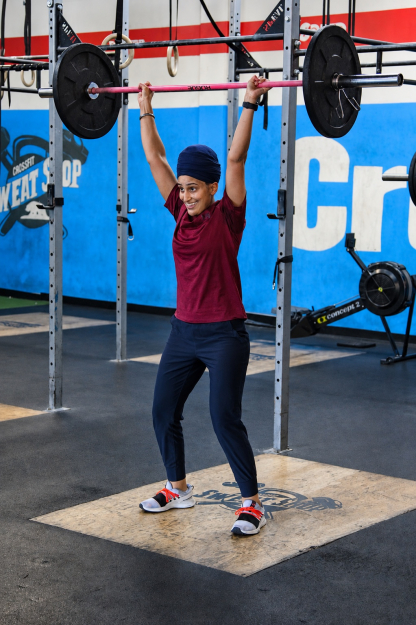
Experience Matters When You’re Learning Something New
CrossFit Sweat Shop opened in Walnut Creek in 2009.
Since then, we have coached thousands of people across different ages, abilities, training histories, and starting points. Some arrived with years of athletic experience. Others were learning how to use a barbell for the first time.
That experience has taught us how to make unfamiliar and technical movements approachable without stripping away what makes the training effective.
Longevity alone is not the point.
What matters is the coaching experience accumulated over those years: seeing where beginners commonly struggle, understanding how to explain a movement in different ways, recognizing when someone needs a progression, and knowing when that person is ready for the next step.
Fitness concepts come and go. Equipment changes. Trends shift. The fundamental responsibility of a good gym remains the same:
Meet people where they are, teach them well, and help them progress.
For active adults exploring CrossFit for beginners in Walnut Creek, that coaching experience matters. You should not be expected to arrive knowing how to do everything. You should be able to trust that the people teaching you understand how to help someone begin.
A Good Gym Should Give You Room to Grow
If CrossFit looks more technical than the exercise you are accustomed to, reconsider what that actually means.
It does not mean CrossFit is only for advanced athletes.
It means you have found a form of training with skills to develop, challenges to work toward, and room to progress for years.
You may not know the names of all the movements yet. You may need to begin with a lighter barbell, a simpler variation, or a slower pace. You may feel like a beginner—because you are one.
There is nothing wrong with that.
Being new at something is not evidence that you don’t belong. It is the first stage of becoming capable.
A good gym shouldn’t expect you to arrive knowing everything. It should give you the opportunity to leave knowing more.